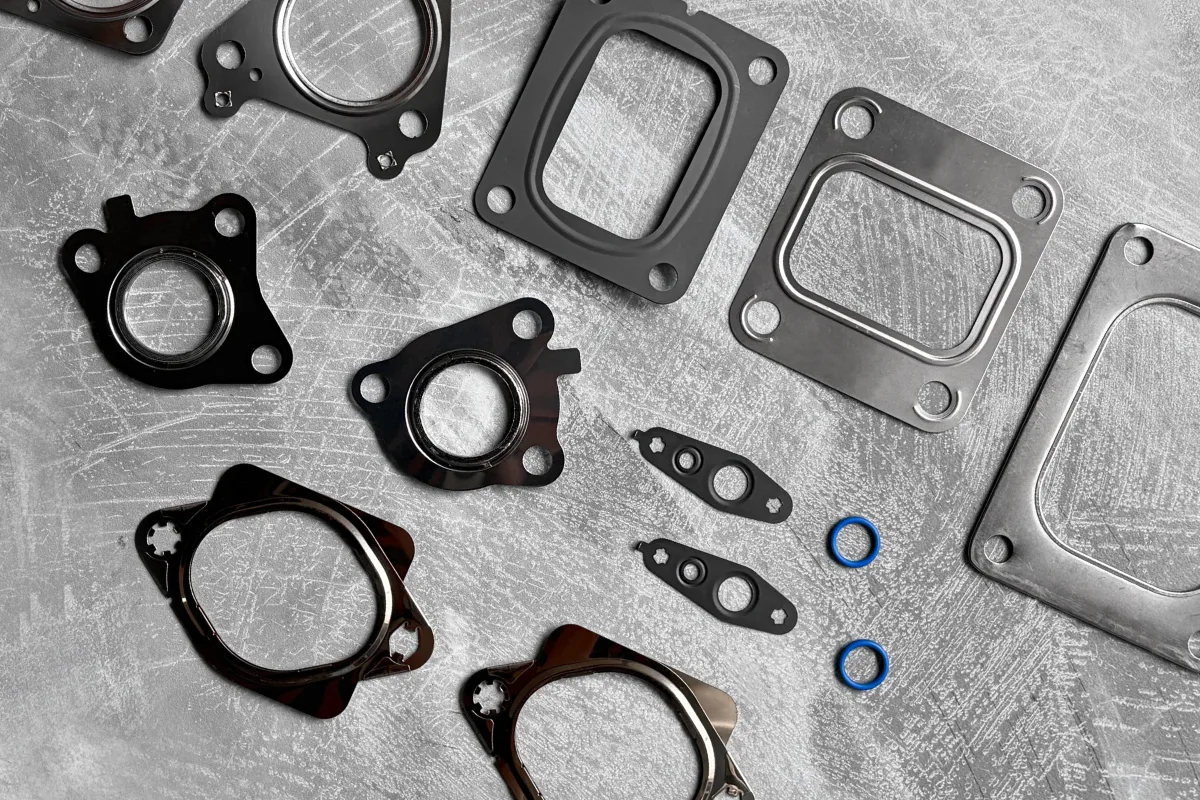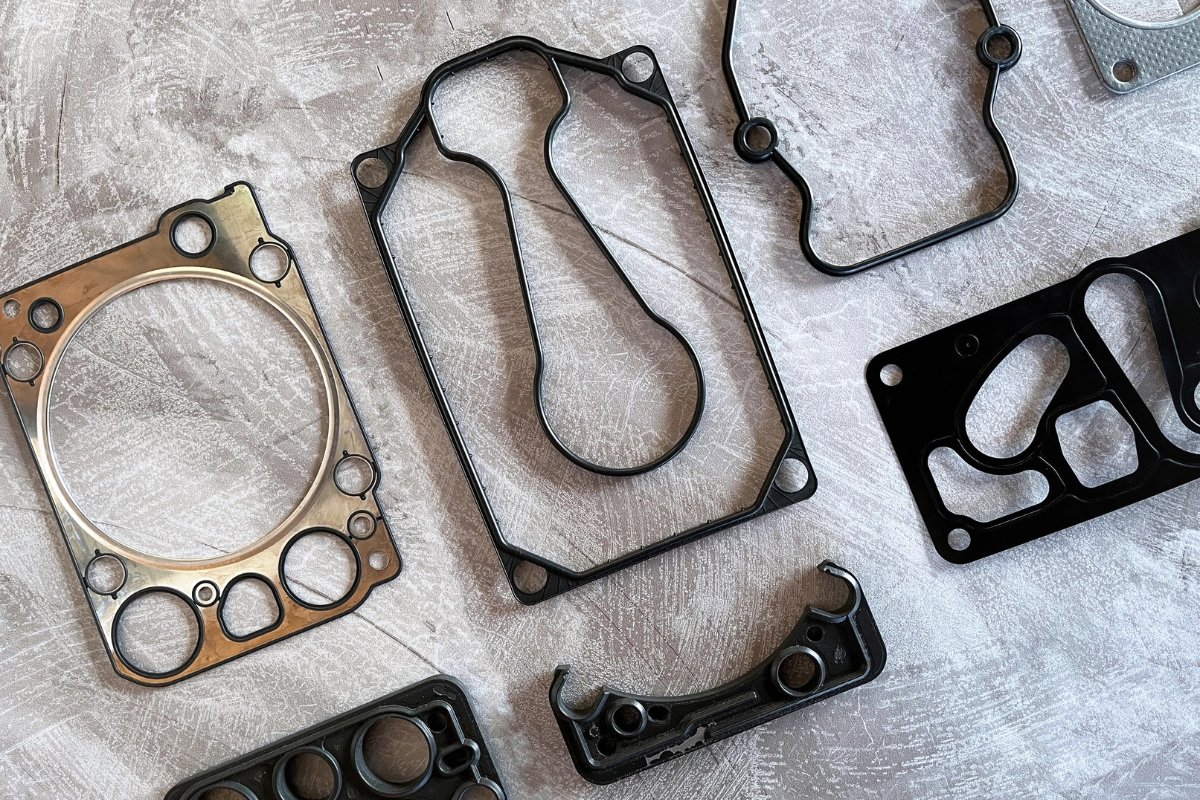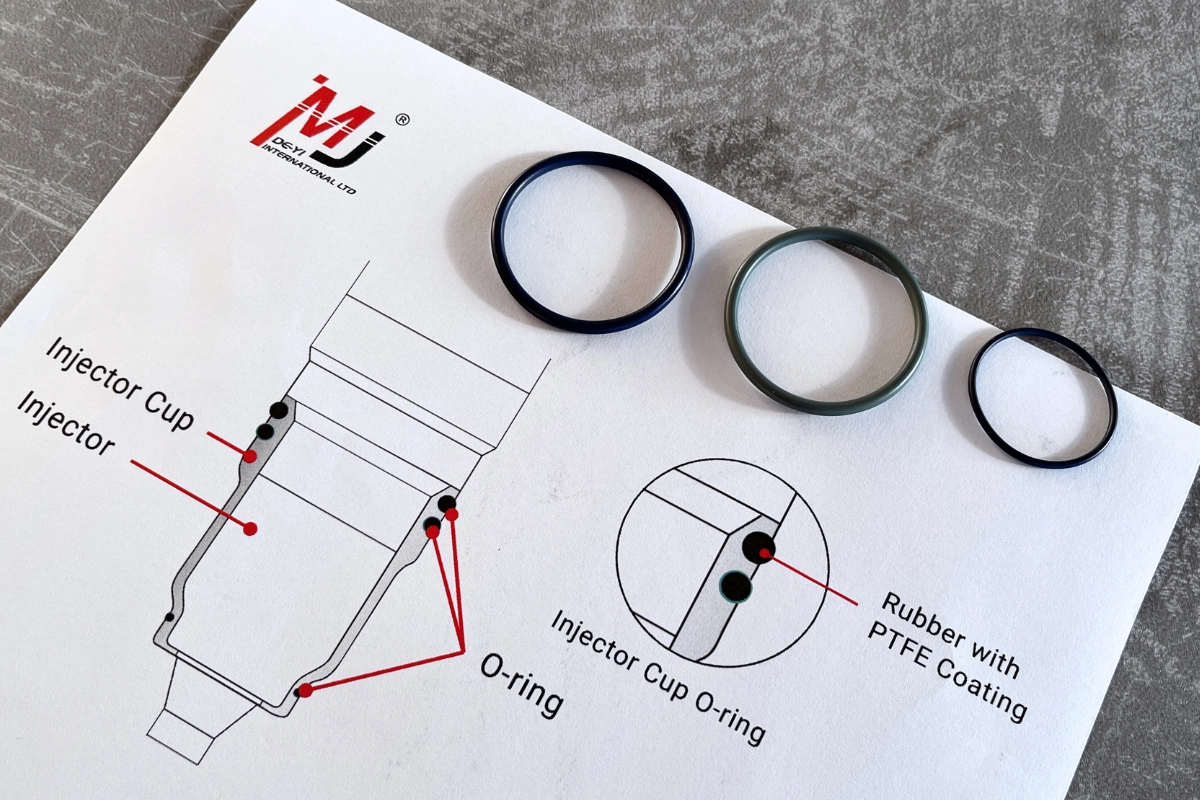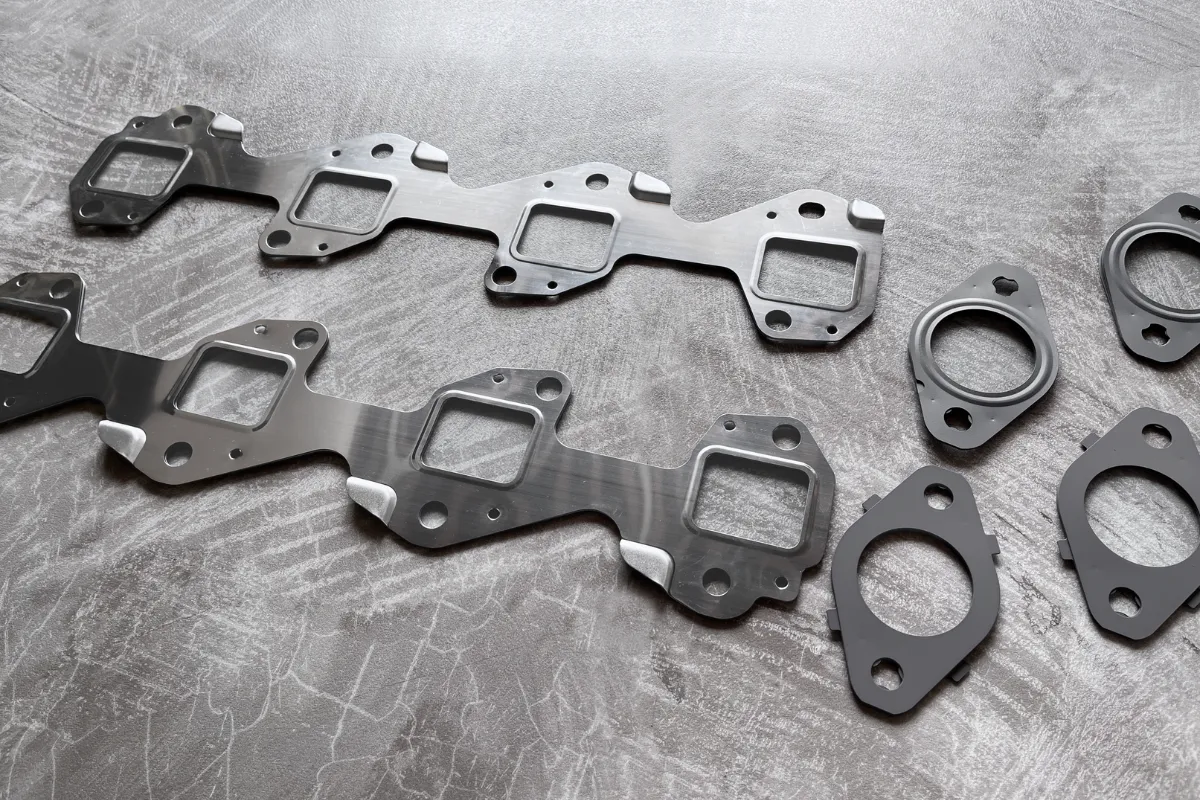
Exhaust manifold gasket plays a critical role in sealing exhaust gases and protecting engine components. This guide covers common exhaust manifold gasket symptoms, including unusual noise, fumes, and performance issues, along with key causes of failure. It also explains when exhaust manifold gasket replacement is needed and how proper maintenance can help prevent costly engine damage.
What is Exhaust Manifold Gasket?
The exhaust manifold gasket is a key part of the engine’s exhaust system. It’s constantly exposed to extremely hot exhaust gases coming straight out of the combustion process.
Because of that, these gaskets are usually made from materials that can handle high temperatures, such as multi-layer steel (MLS) with MoS₂ coating, graphite composites, or ceramic-coated steel. If you want to learn more about material options, check out our article: 5 Types of Exhaust Gasket Material, where we go deeper into this topic.
The exhaust manifold gasket sits between the exhaust manifold and the engine block, sealing the connection and preventing exhaust leaks that could potentially damage nearby wires and sensors.
However, since this area is under constant heat and thermal cycling, the exhaust manifold studs or bolts can gradually loosen over time. When that happens, it can lead to a blown exhaust manifold gasket.
Because of the extreme heat in the exhaust system, some exhaust manifolds are also equipped with heat shields. These shields help protect surrounding components by preventing hot exhaust parts from coming into contact with oil or fuel in the event of a hose, or seal failure.
Symptoms of Exhaust Manifold Gasket Failure
When an exhaust manifold gasket starts to fail, the signs are usually pretty noticeable if you know what to look (or listen) for. Since this gasket is constantly exposed to high heat and pressure, once it loses its sealing ability, exhaust leaks can develop quickly and that’s when these common symptoms start to show up.
1.Unusual Noise:
As mentioned earlier, many exhaust manifold gaskets are made from multi-layer steel (MLS). When the gasket fails, exhaust gases can leak through the layers and create a sharp ticking or tapping noise, especially during cold starts.
2.Visible Smoke or Soot:
If you notice smoke or black carbon buildup between the exhaust manifold and the engine block, that’s a clear sign the exhaust is leaking from that area.
3.Exhaust Smell:
If you smell exhaust fumes under the hood or inside the cabin, it could be due to a leaking gasket. In some cases, the vehicle’s ventilation system may pull air from the engine bay into the cabin, allowing fumes to enter. This can be dangerous—prolonged exposure may cause discomfort, dizziness, or even serious health risks.
4.Reduced Performance & Increased Fuel Consumption:
An exhaust leak can affect the accuracy of the oxygen sensor readings. When the ECU receives incorrect data, it may not properly adjust the air-fuel ratio, ignition timing, or valve timing. This can lead to reduced engine performance and higher fuel consumption.
5.Check Engine Light:
In some cases, a leaking exhaust manifold gasket can trigger the check engine light due to abnormal sensor readings.
Overall, it is important to monitor the symptoms of exhaust manifold gasket failure and take appropriate action when necessary.
Common Causes of Exhaust Manifold Gasket Failure
Exhaust manifold gasket failure doesn’t usually happen overnight. In most cases, it’s the result of long-term heat, stress, and a few common issues that build up over time. If you’re trying to figure out the cause of exhaust manifold gasket failure, here are some of the most common factors to look at:
1.Loose or Broken Exhaust Manifold Bolts or Studs:
As mentioned earlier, the exhaust manifold and its components, including bolts, studs, and gaskets are constantly exposed to extreme heat from the combustion process. Over time, especially under heavy-duty operation, the bolts or studs can loosen on their own.
In some cases, certain engine designs are more prone to this issue. For example, L5P Duramax uses relatively smaller bolts, which may be more likely to loosen over time.
On engines like the 6.7 Cummins, the original design did not account for the addition of EGR systems. The added heat from EGR can increase thermal stress, causing excessive expansion and contraction of the manifold, which may eventually lead to broken bolts or studs, and ultimately gasket failure.
2.High-Load Operation:
Vehicles that are frequently used for heavy towing or operate under high mileage conditions are more likely to experience exhaust manifold gasket failure. Continuous high load means higher exhaust temperatures and more thermal cycling, which accelerates wear on the gasket.
3.Poor Maintenance or Installation Issues:
Rusty or corroded bolts, as well as improper installation, can also lead to gasket failure. If the mating surfaces are not properly cleaned, such as leaving behind dirt, debris, or old gasket material, it can prevent proper sealing and damage the gasket over time.
4.Reusing Old Gaskets or Not Replacing as a Full Set:
Many exhaust manifold gaskets, especially in heavy-duty engines, are designed as individual pieces per cylinder. During repair, it’s common to replace only the visibly failed gasket while reusing the others. However, this can lead to uneven sealing performance, as the old and new gaskets may not behave the same under heat and pressure, increasing the risk of future leaks.
In short, most exhaust manifold gasket failure cases come down to heat, movement, and sealing consistency. Identifying these root causes early can help prevent repeat failures.
Checking and Replacing Exhaust Manifold Gasket
Checking for Exhaust Manifold Gasket Leaks: See, Listen, and Smell
Before taking anything apart, it’s always a good idea to confirm whether there’s actually an exhaust leak. In many cases, you can spot the issue using a combination of visual checks, sound, and smell:
1. Visual Inspection of the Exhaust Manifold Gasket:
Check around the cylinder head, the manifold-to-engine mating surface for any signs of black soot or carbon buildup. These are strong indicators of an exhaust leak. Also look for broken studs or missing bolts, this is a common issue that can cause the manifold to warp and lead to gasket failure.
2. Unusual Sounds:
Pay attention during a cold start. A leaking exhaust manifold gasket often produces a ticking or puffing sound. In some cases, you might hear a whistling noise, which can be caused by exhaust gases vibrating between layers of a multi-layer exhaust manifold gasket.
3. Unusual exhaust fumes or burning smells:
If you notice exhaust fumes inside the cabin, that’s a clear warning sign. Leaking exhaust gases can be pulled into the vehicle through the ventilation system. This is not just a minor issue, it can be dangerous. Prolonged exposure to exhaust fumes may cause discomfort, dizziness, or even loss of consciousness.
Replacing Exhaust Manifold Gasket:
Replacing an exhaust manifold gasket is not always a simple job. Depending on the engine setup, you may need to remove multiple components connected to the manifold, including sensors and, in some cases, the turbocharger. Because of the complexity, it’s generally not recommended as a DIY job unless you have the proper tools and experience.
Also, even if only one gasket appears to have failed, experienced technicians usually recommend replacing the full set. This helps ensure consistent sealing performance across all cylinders and reduces the risk of future leaks.
Final Reminder:
Taking the time to properly inspect and replace the gasket can save you from repeated failures and additional repair costs down the road. A few basic precautions can also make the process safer and more effective:
- Always allow enough time for the engine to cool before starting any work.
- Engine exhaust contains harmful combustion byproducts, always work in a well-ventilated area.
- Since engine designs may vary, always refer to the manufacturer’s service manual for the correct procedures.
Preventing Exhaust Manifold Gasket Failure
Exhaust manifold gasket failure is often preventable with the right maintenance and attention to detail. In many cases, it’s not just the gasket itself, but how it’s installed, how the engine is operated, and how early issues are handled that make the biggest difference.
Here are some practical tips to help prevent exhaust manifold gasket failure:
1. Proper Installation & Clean Mating Surfaces:
- Before installing a new gasket, always make sure the cylinder head and manifold mating surfaces are thoroughly cleaned. Any dirt, debris, or leftover material can cause uneven sealing and lead to leaks.
- Whenever the exhaust manifold is removed, for example, during cylinder head service, the exhaust manifold gasket should always be replaced. Reusing old gaskets is not recommended.
- Follow the manufacturer’s torque specifications and tightening sequence carefully. Improper torque can easily result in poor sealing or premature failure.
2. Early Detection & Retightening:
In some cases, early-stage leaks are simply caused by loose bolts. If detected early, retightening the bolts may help extend the gasket’s service life and prevent a complete gasket blowout.
3. Be Aware of Heat Stress:
High temperature is one of the main causes of exhaust manifold gasket failure. Vehicles that operate under heavy load, such as towing or long-hour operation, should be checked more frequently, as thermal stress can accelerate wear and failure.
4. Use Quality Replacement Parts:
When selecting replacement components, you can choose OEM parts or high-quality aftermarket options made with reliable materials. The quality of the gasket plays a key role in how well it performs under heat and pressure.
Proper prevention comes down to careful installation, paying attention to early warning signs, and avoiding prolonged exposure to extreme heat whenever possible.
It’s also important to remember that the exhaust system is more than just the exhaust manifold. It includes components such as exhaust valves, turbochargers, and aftertreatment systems (EGR, DOC, DPF, SCR). Because of this complexity, it’s always recommended to have inspection and repair work handled by experienced technicians to avoid further damage caused by improper handling.
Exhaust Manifold Gasket for Diesel Engines
MJ Gasket offers exhaust manifold gasket for various industries and applications.
6.7 Cummins Exhaust Manifold Gasket
6.6 Duramax Exhaust Manifold Gasket
MTU S4000 Exhaust Gasket
CAT C15 Exhaust Manifold Gasket replacement
Quick FAQ about Exhaust Manifold Gasket
1. What are the Signs of a failing exhaust manifold gasket?
Common exhaust manifold gasket symptoms include ticking or puffing noises (especially during cold starts), visible soot or carbon buildup around the manifold, exhaust fumes, reduced engine performance, and in some cases, a check engine light.
2. How to confirm an exhaust leak near the engine?
You can usually confirm an exhaust leak by using a combination of visual inspection, sound, and smell. Look for black soot around the manifold, listen for unusual noises, and check for exhaust fumes, especially inside the cabin.
3. What happens when a exhaust manifold gasket fails?
When the gasket fails, exhaust gases can leak out before reaching the rest of the exhaust system. This can affect sensor readings, reduce engine efficiency, increase fuel consumption, and in some cases, allow harmful fumes to enter the cabin.
4. What are common sounds of a blown exhaust gasket?
A blown exhaust manifold gasket often produces a ticking, tapping, or puffing sound. In some cases, you may also hear a whistling noise caused by exhaust gases escaping through small gaps in a multi-layer steel (MLS) gasket.
5. How to replace exhaust manifold gasket?
Replacing an exhaust manifold gasket usually requires removing the manifold and related components such as sensors or the turbocharger. Because of the complexity, it’s typically recommended to have the job done by a professional technician rather than as a DIY repair.
6. How to prevent exhaust manifold gasket failure?
Proper installation, clean mating surfaces, correct torque specifications, early detection of loose bolts, and using high-quality gaskets all help prevent failure. Regular inspection is especially important for vehicles operating under high heat or heavy load.
|
Important Notice: 1. As much as we’d love to bring your classic engine back to life with you, our custom projects are better suited for B2B customers, as they require a minimum order quantity of 500–1000 pieces. 2. Just a heads-up: we do not design or re-engineer gaskets; we focus on gasket duplication, so technical drawings or samples are required. |