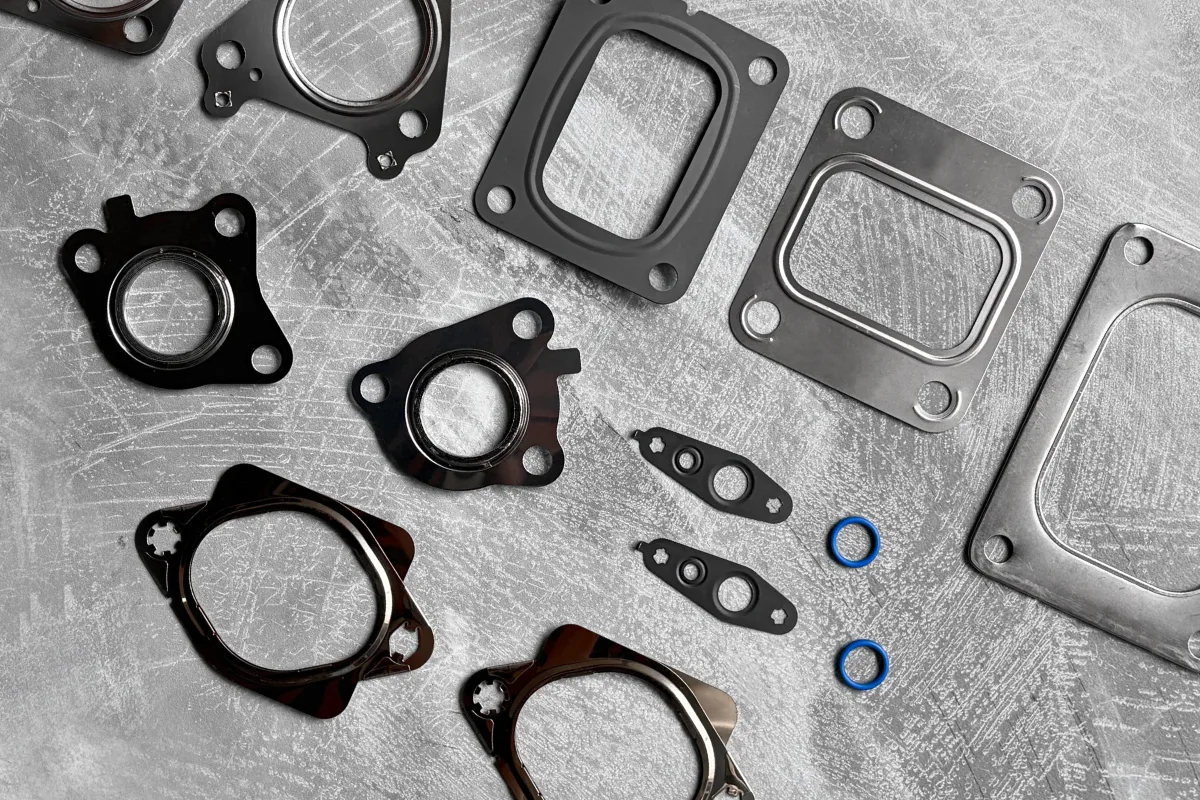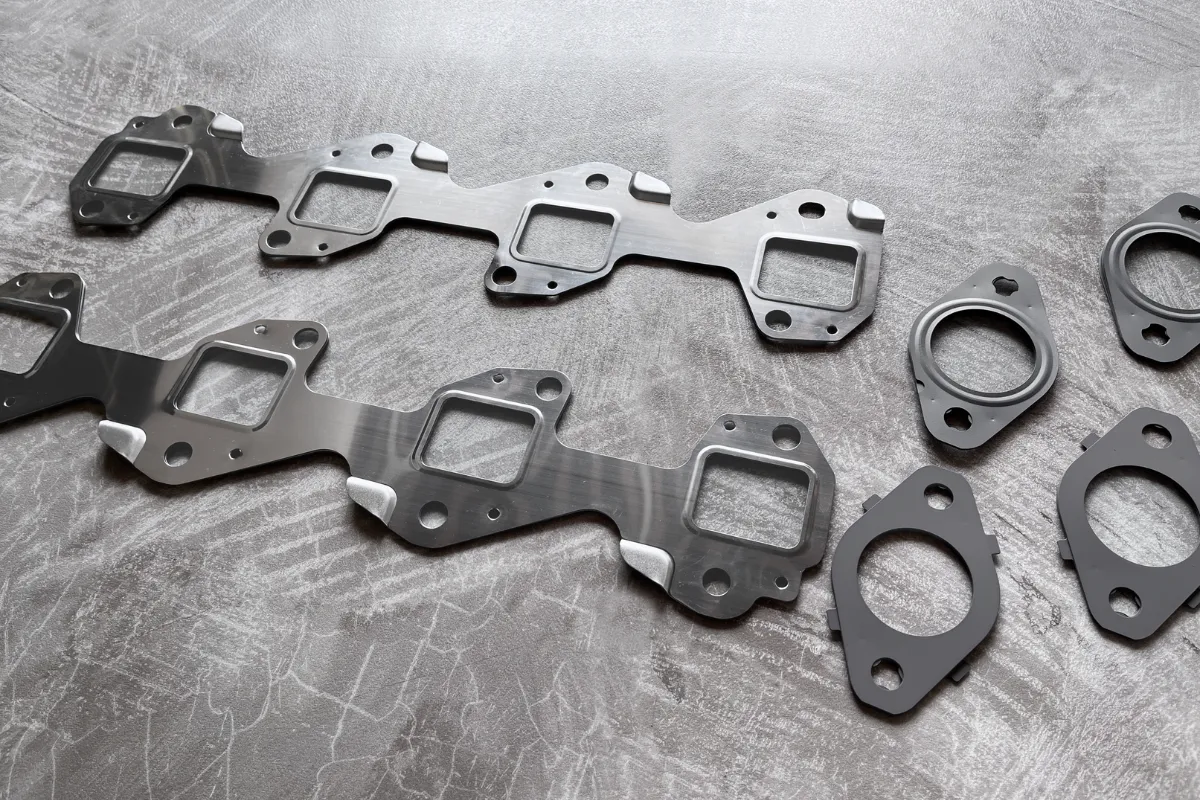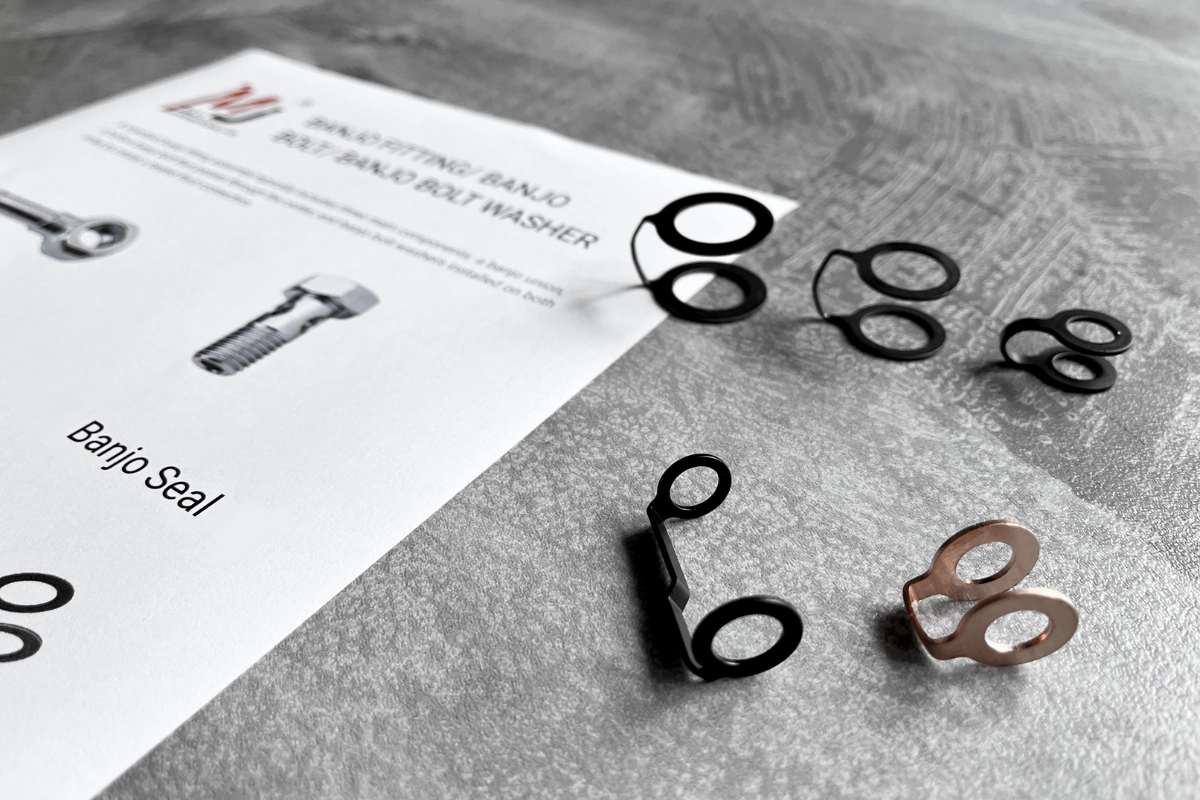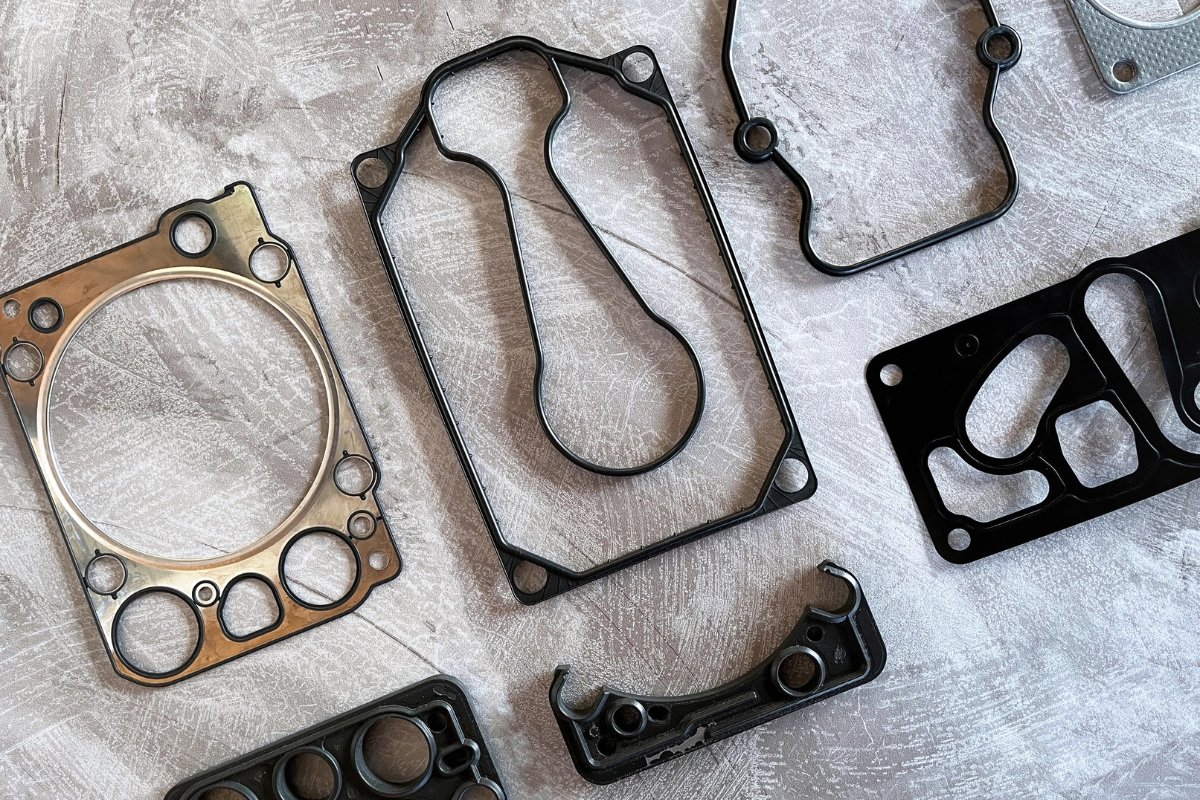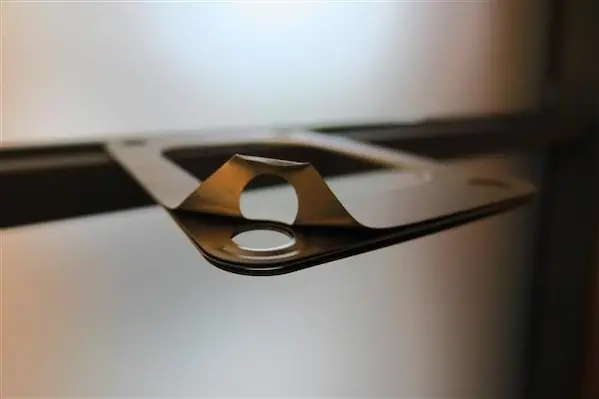
Turbochargers are important components that increase engine internal combustion efficiency by forcing more air into the combustion chamber, generating significantly more power from the same engine displacement. To make a turbocharger work reliably, turbo gaskets are crucial parts, they must endure extreme heat and pressure cycles without failing. The top 3 materials for turbocharger gaskets are sandwich type, multi-layer steel with or without MOS₂ coating, and single-layer steel with embossing.
What Turbo Gaskets Are and Why They Matter
Turbo gaskets are precision-engineered sealing parts placed between turbo components, such as exhaust manifold to turbo, turbo oil drain, and turbo to pedestal. Their primary role is to create an airtight and gas-tight seal that prevents boost pressure and exhaust gases from escaping the system.
Without a properly functioning turbo gasket, the entire forced induction system loses efficiency. Even a minor leak can lead to loss of boost pressure, exhaust gas leaks, oil seepage and premature turbocharger failure. You can read more at Turbo Gasket Symptoms, Failure Causes and Solutions for more turbo gasket failure symptoms.
Because turbo gaskets sit at the heart of a high-stress environment, knowing and using the high-quality gasket material is not optional, it is essential to the longevity and performance of the entire turbocharged system.
The Challenge of Extreme Heat and Pressure in Turbo System
Turbos work directly with high-heat exhaust gas, while boost pressure on the compressor side pushes compressed air into the intake. This combination of extreme heat and pressure creates unique challenges for gasket materials:
- Thermal expansion and contraction: repeated heat cycles cause metal components to expand and contract, stressing the gasket seal with every engine start and shutdown
- Oxidation and corrosion: prolonged exposure to hot exhaust gases accelerates material failure
- Mechanical vibration: constant engine and turbo vibration can cause gaskets to shift, compress unevenly, or crack over time
These conditions make turbo gasket material selection critical. Poor material choice can lead to turbo or even complete engine failure, resulting in expensive repairs.
Why Turbo Gasket Material Matters
How Heat and Boost Pressure Stress Turbo Gasket Materials
Every time an engine runs, the turbo gasket is subjected to a relentless cycle of thermal and mechanical stress. As exhaust gases heat the turbine housing, the gasket material must expand at a compatible rate to maintain a consistent seal, any mismatch in thermal expansion rates between the gasket and the mating surfaces leads to micro-gaps where gases and boost pressure can escape.
High-quality turbo gasket materials are engineered to address both stresses at the same time, maintaining dimensional stability at high temperatures while resisting deformation under sustained boost pressure.
Types of Turbo Gasket Materials
Sandwich Type
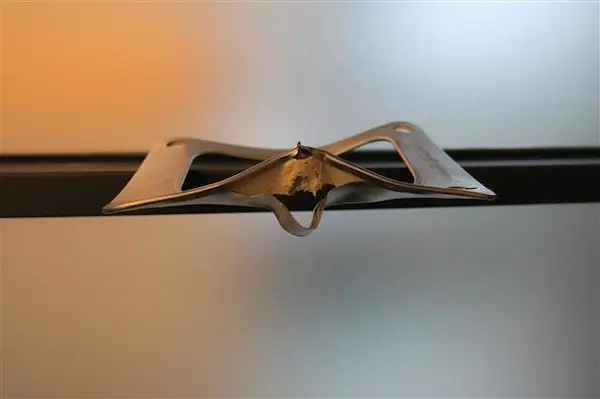 The sandwich-type gasket is constructed with multiple layers of different materials bonded together, typically a soft, compressible core material such as graphite or non-asbestos sandwiched between two outer metal facings. This layered construction gives it a unique combination of properties that make it well suited for turbocharger applications.
Based on our 20 years of gasket experience, many professional turbo rebuilders request to use graphite filler instead of non-asbestos – the OEM version. For more case studies, read Case ID: MJ-CS-23-002 Sandwich-Type Turbo Gasket for Waukesha.
Multi-Layer Steel (MLS) With/Without MOS₂ Coating
Multi-Layer Steel (MLS) consists of two to seven layers of steel with varying thickness that work together as a system to maintain a consistent seal under extreme conditions. The steel layers are precision-stamped with embossed beads around critical sealing zones. When the gasket is clamped between flanges, these beads compress and create concentrated sealing pressure at exactly the right locations. If the flange surfaces flex under heat or pressure, the steel layers recover and maintain sealing force.
To further enhance the heat and pressure resistance of the steel layers, many MLS gaskets are treated with an MOS₂ (Molybdenum Disulfide) coating – a dry lubricant with excellent high-temperature properties.
Single-Layer Steel With Embossing
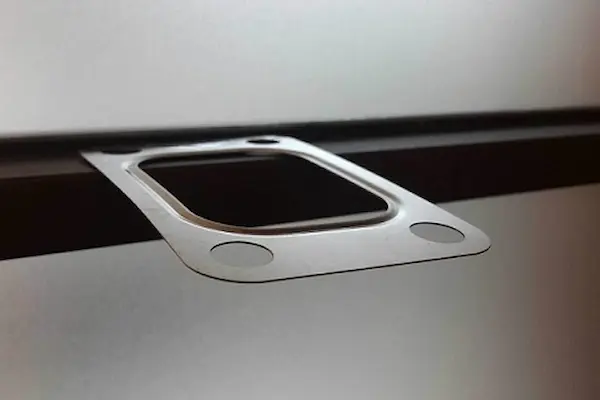 Single-layer steel is simple in construction, but when embossed beads are pressed into the steel, they reinforce its sealing capability. The embossing concentrates clamping load at critical sealing points, much like MLS gaskets, but in a simpler, more cost-effective single-layer format.
Turbo Gasket Material – Applications
Sandwich Type
Many heavy-duty engines, such as class 8 truck engines and marine engines, are equipped with turbos that use sandwich-type gasket material – for example, MTU S4000 turbo gasket, Caterpillar C7 turbo gasket, and turbo gasket for Waukesha engines.
Multi-Layer Steel (MLS) With/Without MOS₂ Coating
It is very common to see Multi-Layer Steel (MLS) with or without MOS₂ coating used in engine sealing solutions, due to its exceptional durability and extreme pressure management. For instance, MLS with MOS₂ coating: 2017 Ford F-350 3.5 EcoBoost turbo gaskets, Paccar MX-13 Turbo Gasket, and Cummins ISX turbo gasket; and MLS without MOS₂ coating: 2019 Cummins 6.7 turbo gasket and Mack E7 turbo gasket.
Single-Layer Steel With Embossing
Single-layer steel with embossing is commonly found in both small and large turbochargers, such as Detroit Diesel S60 turbo gasket, Cummins K38/K50/QSK60 turbo gasket, and Paccar MX-13 turbo gasket.
Quick FAQ about Turbo Gasket Material
What is turbo gasket material made of?
Turbo gaskets are made from three main materials: sandwich type (a soft compressible core of graphite or non-asbestos sandwiched between two outer metal facings), multi-layer steel (MLS) with or without MOS₂ coating (two to seven layers of varying thickness steel), and single-layer steel with embossing (a single stamped steel sheet with raised beads for concentrated sealing).
What is the best material for a turbo gasket?
It depends on the application. MLS with MOS₂ coating is the top choice for high-performance and heavily turbocharged engines such as Ford EcoBoost, Paccar MX-13, and Cummins ISX due to its exceptional durability and extreme pressure management. Sandwich-type gaskets with graphite filler are preferred by professional turbo rebuilders and widely used in heavy-duty applications like class 8 trucks and marine engines. Single-layer steel with embossing is a reliable and cost-effective option suitable for both small and large turbochargers.
Are turbo gaskets reusable?
Turbo gaskets are generally not recommended for reuse. Since turbo gaskets must endure extreme heat, pressure cycles, and mechanical vibration, they deform and compress to the specific mating surfaces over time. Reusing a gasket significantly increases the risk of boost leaks, exhaust gas escape, and oil seepage – all of which can lead to premature turbocharger failure and expensive repairs.
|
Important Notice: 1. As much as we’d love to bring your classic engine back to life with you, our custom projects are better suited for B2B customers, as they require a minimum order quantity of 500–1000 pieces. 2. Just a heads-up: we do not design or re-engineer gaskets; we focus on gasket duplication, so technical drawings or samples are required. |